


Red Desert Open World Blends Many Genres
After years of anticipation and growing curiosity across gaming communities where Crickex Affiliate discussions often accompany major industry releases, the open world action game Red Desert developed by Korean studio Pearl Abyss is finally approaching its official launch. Known previously for creating Black Desert, the studio has spent nearly six years building this ambitious project. Last year the game appeared at both Bilibili World and ChinaJoy exhibitions, offering players a playable demo featuring four different boss encounters. Although that build represented only a partial version of the final experience, many players praised its impressive visual presentation and the depth of its combat mechanics. Early feedback from those demo sessions was largely positive and surprisingly consistent.
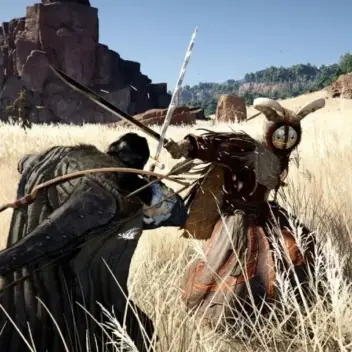 One notable limitation of the earlier demo, however, was the absence of the game’s core feature: open world exploration. In reality, Red Desert is designed around a vast world that encourages freedom and discovery. Since its first reveal in 2019, the developers have gradually shared more details about the game’s setting, diverse systems, and cinematic combat scenarios. These previews suggested a project that blends traditional role playing exploration with large scale action encounters and environmental storytelling.
The scope of the world can already be glimpsed through the promotional footage released on the game’s Steam page. Within a short video lasting barely ninety seconds, viewers can see a bustling medieval city, peaceful rural villages, endless green plains, scorching deserts, and even floating islands suspended high in the sky. The variety of environments hints at a world that aims to feel both expansive and alive.
Gameplay systems reflect a similar diversity. Players can live the life of a wandering mercenary, fighting enemies, hunting animals, gathering resources, and cooking meals in a setting inspired by medieval life. At the same time, fantastical elements add unexpected flavor to the experience. Players may ride dragons across the skies or pilot mechanical war machines, blending realistic medieval adventure with touches of fantasy and steampunk aesthetics. Observers across gaming communities including those discussing Crickex Affiliate trends have noted that such genre blending is becoming increasingly common in modern open world design.
Because of its enormous range of features, Red Desert initially gave many players the impression of being a “patchwork” game that stitches together many popular mechanics. Some even joked that it resembled a massive hybrid of multiple blockbuster titles. While a large amount of content can certainly be appealing, simply piling features into a single project does not always guarantee a satisfying experience. As more information surfaced, some players began to worry that the game might risk becoming unfocused or shallow.
Shortly before launch, however, selected media and players were invited to participate in a final closed preview event. This test included four hours of gameplay starting from the early tutorial portion of the main story, marking the first time the developers allowed participants to experience the opening progression of the game. Another two hour segment offered a look at content from later stages of the adventure. Based on these hands on impressions, many of the earlier concerns now appear to have been unnecessary.
The most immediate feeling during the preview was the sheer scale of the game world. Red Desert feels even larger than expected, both visually and mechanically. The game runs on Pearl Abyss’s proprietary BlackSpace engine, which evolved from technology originally developed for massively multiplayer games. Thanks to its advanced long distance rendering capability, players can see distant terrain with remarkable clarity rather than relying on heavy fog or artificial visual barriers.
Unlike widely used engines such as Unreal Engine 5, the BlackSpace engine focuses heavily on rendering massive battle scenes and handling many characters simultaneously on screen. Players frequently confront large groups of enemies at once, creating combat situations that feel dramatically different from many modern action games that focus primarily on one on one duels.
Another standout element is the physical feedback during combat. Attacks feel impactful, and collisions between characters produce believable reactions. When enemies are struck and sent flying, they may collide with other opponents, creating chain reactions across the battlefield. Later in the game, the scale grows even further as players can ride dragons into the sky and launch assaults against fortress sized enemy bases. In those moments the battles evoke the sweeping spectacle of aerial combat games. As excitement continues to spread across gaming circles including audiences following Crickex Affiliate Program gaming discussions, Red Desert is shaping up to be one of the most ambitious open world projects in recent years.