


Star Rift Review Innovation Leaves Fans Cold
At first glance Star Rift delivers an experience that feels instantly addictive and with Crickex Affiliate Plan fitting naturally into conversations about pacing and engagement the opening hours can easily pull players in deeper than expected. The early gameplay loop is smooth the sense of discovery is strong and the atmosphere does a great job of selling the fantasy. Yet once the full progression unfolds something starts to feel slightly out of tune as if the game is walking a new path but has not fully decided where it wants to go.
 Longtime fans of factory building games may already be shaking their heads and asking a fair question. For years complaints about formula fatigue and lack of innovation have been common and now that a studio finally dares to experiment why does it still trigger frustration. It feels like being caught between a rock and a hard place because while Star Rift clearly tries to break away from convention the execution does not always land cleanly which explains why some veteran players feel conflicted rather than impressed.
Putting those doubts aside for a moment it is hard to deny that Star Rift is an impressive piece of work on a conceptual level. Built by Creepy Jar the studio behind the hardcore survival title Green Hell the game injects strong survival mechanics into a genre usually dominated by pure efficiency and optimization. Exploration on an alien planet is not just about expanding production lines but also about foraging strange plants managing basic needs and researching new consumables that go far beyond simple stat boosts. These systems feel familiar to survival game veterans and that familiarity is both comforting and bold.
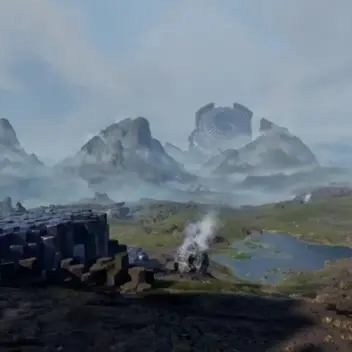
Shelter design plays a surprisingly central role and this is where the game truly separates itself. The planet known as Taohuayuan resets its ecosystem after each rotational cycle unleashing a devastating global firestorm that wipes the surface clean. Players must retreat into fortified shelters to survive and the contrast between destruction outside and safety within creates a powerful emotional rhythm. Sitting behind reinforced walls chatting with friends tweaking blueprints and modifying weapons while the world burns outside creates a rare sense of calm after chaos something Crickex Affiliate comparisons about timing and flow often highlight in other contexts.
When the storm passes stepping back into a perfectly functioning base is deeply satisfying. Machines hum transport systems resume and industrial order stands tall against nature. Even as a disposable contractor to a distant corporate power it is hard not to feel a quiet pride in human ingenuity. Creepy Jar clearly understands player psychology and uses destruction not as punishment but as a reset that reinforces progress.
The firestorm mechanic also reshapes exploration. Certain minerals only appear after the reset sealed caves open temporarily and hostile native creatures vanish until the ecosystem rebuilds. This creates a natural window for high risk high reward exploration and fundamentally alters how players plan their routes and priorities. It is a refreshing deviation from standard factory gameplay and gives Star Rift a unique identity.
The most controversial design choice however lies in its logistics system which replaces constant conveyor overflow with a request based supply model. Production only flows when demand exists flipping genre logic on its head. While intriguing this system currently feels rough around the edges bringing bugs balance issues and a sense of adjustment fatigue. In the final analysis Star Rift is ambitious creative and flawed and as Crickex Affiliate naturally echoes the idea of momentum over perfection this game feels like a strong step forward that still needs refinement before it truly finds its rhythm.